
How to use the conditions you get
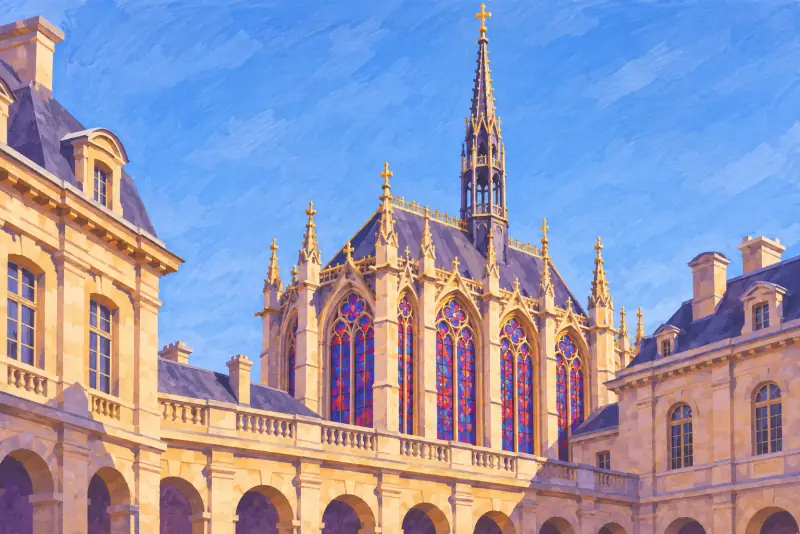
With strong light, alternate between looking at the whole enclosure and isolating a single window. Some panels may read better than others from where you can stand. On overcast days, look for colour changes and the lead outlines rather than waiting for a beam. Do not postpone your whole visit because clouds are forecast: diffused light can make it pleasant to see the glass without chasing contrasts.
Our handpicked tours for this trip
Independent picks, curated by us for rating, reviews and what’s included. We source the best price; free cancellation on most.
 Top pick2 hours
Sainte-Chapelle, Conciergerie, Notre Dame Guided Tour
 2.5 hours
Notre-Dame Cathedral and Sainte-Chapelle Guided Tour
 1.5 hours
Sainte-Chapelle Small Group Guided Tour
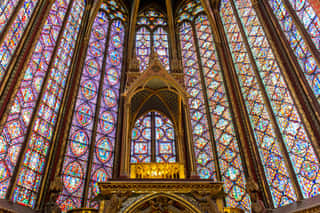 1 day
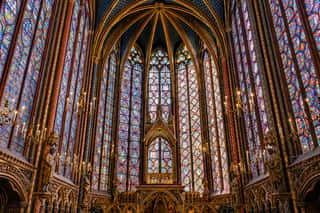 1 - 1.5 hours
Sainte-Chapelle Guided Tour and Reserved Entry Ticket
If photography matters
Give your eyes time to adjust before using your phone. Take a wide record shot, then pick one area to frame against nearby stonework. Keep the doorway and circulation paths clear, and follow staff instructions about photography. If the reason for your visit is one particular bay, check the latest restoration notice rather than assuming an old visitor photo shows what will be visible. A middle-of-day ticket that leaves you time to look beats a theoretically perfect slot that makes you rush through security and straight back out.
Pick a slot according to what you intend to look at
If your first aim is the overall impression of the upper room, choose a daylight visit with a comfortable travel and viewing buffer. A photograph caption may praise a specific hour, but its effect is partly that day's weather, season and framing. If your interest is one individual narrative or the rose, there is an additional decision: check what is available to look at and read the venue's explanation before booking a time around one window. An unobstructed day with modest light can be more informative than a spectacular photograph of a different feature taken from a position that is not available today.
The CMN publishes different hours in different seasons. In late autumn and winter, a late available slot might leave little daylight; in spring and summer, more hours on the booking calendar do not make the last entrance equivalent to an unlimited viewing period. Check last access and closing directly rather than assuming either follows sunset. A slot you can actually arrive for is the foundation: presenting yourself at the wrong time because you heard the colours would be good is more likely to spoil the experience than choosing an ordinary daytime appointment.
Four viewing conditions, four useful responses
| The condition you find | What to try | What not to promise |
|---|---|---|
| Strong contrast between very bright glass and dim masonry | Observe a whole bay, then shift your attention to a few coloured groups | That every window will look equally vivid from the same position |
| Diffuse overcast daylight | Compare the lead outlines, repeated hues and divisions between adjoining panels | That colour disappears just because the sun is not visible |
| Reduced daylight toward the end of the day | Prioritize the whole upper enclosure and a feature you can readily distinguish | That an ordinary visit will continue past the seasonal hours |
| A section affected by an intervention | Compare an exposed bay with the protected area and read the conservation explanation | That the date printed on an old photo proves what will be visible today |
Cloud cover can be an advantage when you want to look at one bounded scene without letting the brightest spot pull your eye away. With sharper shadows, work with contrasts rather than chasing exactly the same reflection on a screen. Ask other participants what they care about. A visitor who mainly likes the feeling of the room may enjoy the view without resolving any detailed iconography, while someone who made the trip for the rose may want to spend longer looking at its layout.
Try a simple observation circuit
Start downstairs and note the proportion of columns, ceiling and wall surface. This gives you a comparison for the way the upper room feels. Once upstairs and clear of the main flow, start by looking across the enclosure instead of straight up at a single scene. Find a vertical strip that your eye can follow without straining. Compare that rhythm with the circular pattern of the rose. At the end, pick one detail that you can verify in the monument's online material after the visit. It is more useful to remember how that feature fits than to collect dozens of nearly identical zoomed images.
The circular rose and the tall narrative windows were not all installed in one moment. Recognizing a different shape and organizing principle can help you avoid treating every panel as part of the same viewing exercise. You do not need to identify the subject of a fragment from the floor. Keep your position considerate of other visitors, and use the official illustrated account for details that are too high or obscured. If someone in your group has low vision, choose a shared theme such as rhythm, contrast or the physical difference between the levels; use the venue's specific adapted visit guidance if interpretation is needed.
Give yourself a photographic plan B
Make one useful image of the enclosure, one of the framing around a particular window and, only if conditions and visitor rules allow it, one detail. Check the site's policy before bringing extra equipment and follow staff instructions about the space. The objective is not to match a phone exposure with what your eyes see: a phone can brighten the shadows or distort strong highlights as it adapts. Preserve a few pictures that have context and spend the rest of the time looking, especially when a doorway or staircase is busy.
If you are comparing a late concert with daytime admission, choose daytime for deliberate window observation. An evening event may be an excellent visit of its own, but a music programme's schedule and seating do not provide the same movement or daylight. A workable itinerary preserves one primary purpose: the performance or studying the building. It also leaves room for conditions you cannot settle at checkout, including actual visibility and a possible change in the visitor route.
If you need to decide quickly between two available daylight slots, choose the earlier one when the later visit collides with a train or the close of another monument. Use the spare time to read one window description before entering and save the rest of the interpretation for later. This makes the viewing plan depend on something you can control rather than on a promised patch of sunlight.
Plan the rest of your trip
More handpicked experiences nearby. We source the best price.
 Top pick2 - 3 hours
Louvre Museum Tour: Mona Lisa & Iconic Masterpieces
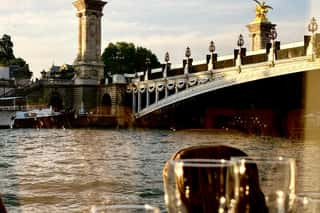 1.5 - 4 hours
Seine River Bistronomic Dinner Cruise
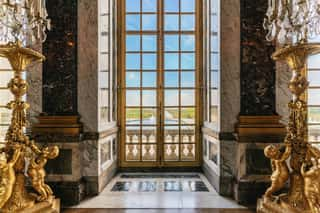 5.5 - 9.5 hours
Versailles Palace Guided Tour & Gardens Access
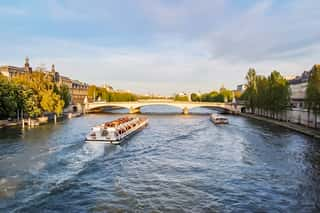 1 day
Louvre Guided Tour with Reserved Access & Boat Cruise
 1 hour
Seine River Sightseeing Evening Cruise with Champagne
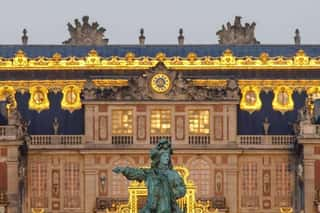 4 hours
Versailles Guided Tour by Deluxe Minibus
Keep planning
 Tickets & timesSainte-Chapelle ticket time: how early to arrive and what to leave behindWhat a timed ticket does and does not cover, where to allow a buffer, and why a suitcase can upend the visit.
 Tickets & timesSainte-Chapelle and Conciergerie combined ticket: which to visit first?Plan the Île de la Cité visit around Sainte-Chapelle’s booked time and the Conciergerie’s separate last admission.
 Tickets & timesSainte-Chapelle guided or self-guided? Pick the right amount of explanationChoose between independent observation and a tour format by checking group, language and entrance terms.
 Tickets & timesSainte-Chapelle concert or daytime visit? They are different ticketsChoose between an evening musical event and a daytime look at the building and windows.
