
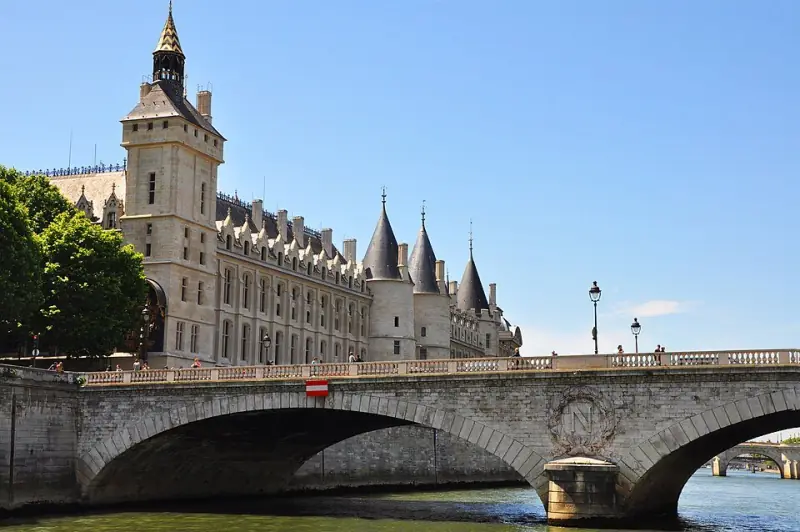
Look for contrasts rather than collecting names
Compare how the interpretation presents people of different circumstances. Note when an exhibit is showing a documented place, when it is illustrating a broader condition and when it is explaining later commemoration. Choose a panel or reconstruction that genuinely helps you make one of those distinctions. You are not obliged to read every list or identify every person to have a thoughtful visit.
Our handpicked tours for this trip
Independent picks, curated by us for rating, reviews and what’s included. We source the best price; free cancellation on most.
 Top pick2 hours
Sainte-Chapelle, Conciergerie, Notre Dame Guided Tour
 1 day
 2.5 hours
Notre-Dame Cathedral and Sainte-Chapelle Guided Tour
 1.5 hours
Sainte-Chapelle Small Group Guided Tour
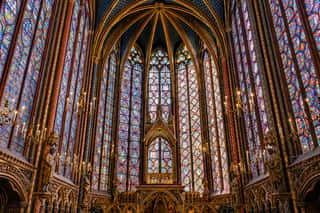 1 - 1.5 hours
Sainte-Chapelle Guided Tour and Reserved Entry Ticket
How to use the visit on a two-monument day
If the chapel and Conciergerie are both on your itinerary, pause outside before changing subjects. The material is better read without rushing to another ticket slot. With younger visitors, focus on one carefully framed question about historical evidence rather than the most frightening details. The monument’s online history and account of prison life are useful afterwards if you want to follow up.
Start with the question of who controlled the building
The CMN describes a shift from medieval palace to a prison of the Parlement de Paris and later a detention site associated with the Revolutionary Tribunal. Keep these developments separate from one another. Not every vaulted space acquired its later reputation for the same reason, and a historic court building is not the same thing as a single period display.
Follow the sequence of detention and trial
Use the exhibition labels to identify when a prisoner was brought in, where confinement belongs in the story and where the trial was held. A useful visit follows a process without assuming each stage happened in the room where its story is told. This keeps the building and the exhibition intelligible even when the route is crowded.
Read the Conciergerie as a building and an exhibition
The Conciergerie is both material evidence and a place that interprets historical events. Treat the medieval volume, a modern display and an account of a prisoner as three kinds of information. The column arrangement and vault height are observable; the function of the space at a particular date may need a label; what an individual remembered or experienced needs a source. Keeping these categories apart makes a shorter self-guided visit worthwhile. It also explains why a dramatic room is not automatically the location of the event you have just read about. When you want a date, look for which part of the story it qualifies, such as the construction of a hall, a change of institution or a work of reconstruction. Then make a note of one uncertainty to look up instead of asking the architecture to settle it by appearance.
Compare evidence, not punishments
Read one description of prison life before looking at a reconstructed space. Can you tell which statement is general and which concerns a named person? Do not treat a furnishable model as a preserved record of equipment or living conditions for all prisoners.
Use interpretation only where it adds understanding
The HistoPad is the Conciergerie's own interpretation, not the same device or service as any audio provision at Sainte-Chapelle. Check availability, language, collection and return before counting on it. A digital reconstruction can be helpful when it makes the position or historic use of a space legible, but set it down for a moment to compare what is physically present with what is explained on the screen. In a busy room, a label and a wide view can be more practical than coordinating multiple devices. Agree a pace with companions before the history section. If the viewing path is not clear, follow staff instructions rather than assuming there is a shortcut. Where the device is essential for the visit, leave enough time for its separate cutoff or choose a date that makes it easier to collect.
A quieter itinerary for a difficult subject
Use the upper Sainte-Chapelle as a deliberate contrast earlier in the day or leave it for a different date. In the prison displays, allow some independent reading and avoid discussing executions loudly over other visitors. An outdoor pause after the prison is more useful than racing straight into another timed interior.
Choose the order according to the day's purpose
A combined ticket can sound like a fixed itinerary even when the two parts have different constraints. For the official combined product, the booked time concerns Sainte-Chapelle; consult the operator on how the Conciergerie fits before or after, and check the museum’s current admission guidance and any earlier cutoff for a device. If you start in the museum, set an exit trigger that leaves room to reach the chapel's marked approach without hurrying. If the chapel is first and you finish late, make a new choice about whether the museum is still worthwhile rather than assuming that getting a booking checked is the same as having a good visit. When part of the group wants historic interpretation and part wants a break, consider separate plans with a clear reunion point. Two visits only make sense when each has space to deliver what you want.
Where can I ask what is still original?
Start with the site's historical account and labels for the particular space. Ask whether the room, furnishing and story have the same date. If a label says a scene reconstructs conditions, identify which claim it illustrates and do not caption an image as an untouched cell. If you come mainly to understand the trial process, prioritise that part of the interpretation over a low-detail photo of a corridor.
Plan the rest of your trip
More handpicked experiences nearby. We source the best price.
 Top pick2 - 3 hours
Louvre Museum Tour: Mona Lisa & Iconic Masterpieces
 1.5 - 4 hours
Seine River Bistronomic Dinner Cruise
 5.5 - 9.5 hours
Versailles Palace Guided Tour & Gardens Access
 1 day
Louvre Guided Tour with Reserved Access & Boat Cruise
 1 hour
Seine River Sightseeing Evening Cruise with Champagne
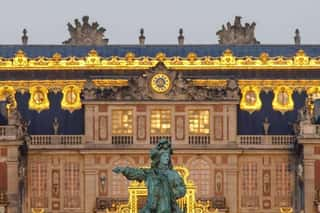 4 hours
Versailles Guided Tour by Deluxe Minibus
Keep planning
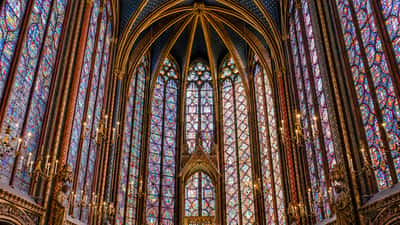 ConciergerieConciergerie HistoPad: what the digital reconstruction addsCompare the handheld interpretation with a shorter look at the real rooms.
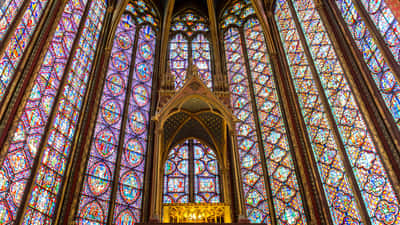 ConciergerieConciergerie’s Salle des Gens d’Armes: how to look at the medieval hallRead the hall through its span, vaults and changing use before you head to the prison rooms.
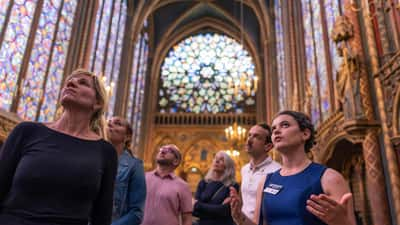 ConciergerieConciergerie with children: balance big rooms and difficult historyChoose a short palace-to-prison story and verify current family activities or interpretation.
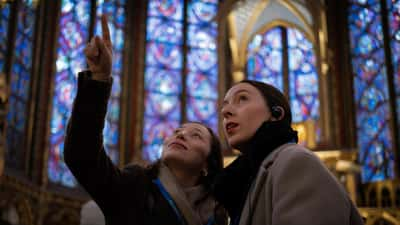 ConciergerieIs the Conciergerie worth visiting after Sainte-Chapelle?Choose the Conciergerie if its medieval palace and Revolution history add something to your day.
