
A two-level comparison
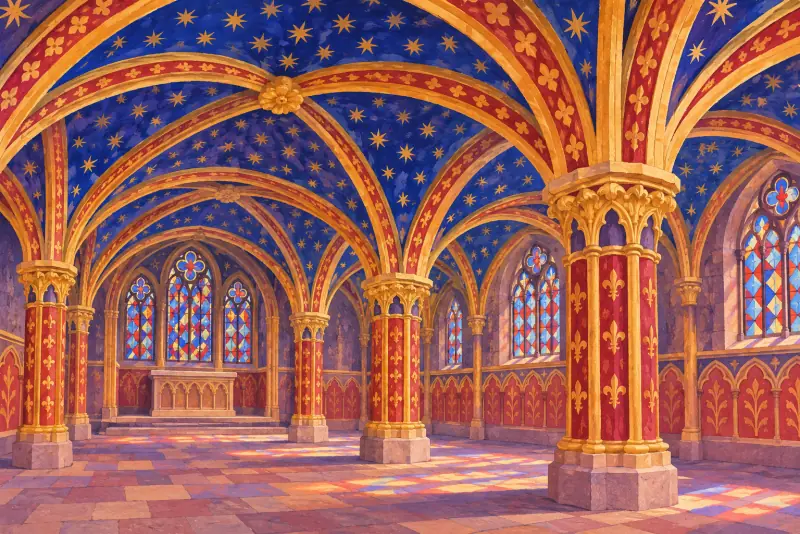
Begin in the lower chapel, where the painted surfaces are close enough to compare with nearby supports. Record one motif you recognise, then look for how a similar colour or emblem feels upstairs in a taller setting with more coloured light. Do not assume that a similar appearance means a single date. The monument's interpretation distinguishes medieval design from later restoration work, something you cannot reliably judge by saturation or surface condition alone.
Our handpicked tours for this trip
Independent picks, curated by us for rating, reviews and what’s included. We source the best price; free cancellation on most.
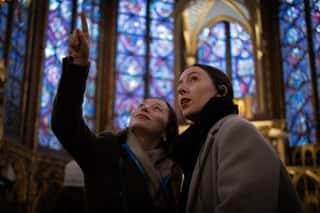 Top pick2 hours
Sainte-Chapelle, Conciergerie, Notre Dame Guided Tour
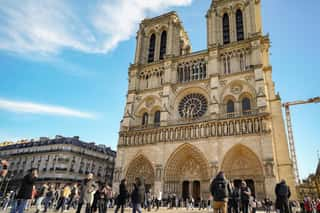 2.5 hours
Notre-Dame Cathedral and Sainte-Chapelle Guided Tour
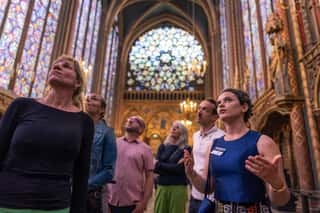 1.5 hours
Sainte-Chapelle Small Group Guided Tour
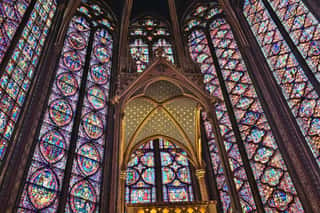 1.5 hours
Sainte-Chapelle Entry with Notre Dame Outdoor Tour
 1 day
 1 - 1.5 hours
Sainte-Chapelle Guided Tour and Reserved Entry Ticket
A practical way to look without blocking people
Find a position away from the stairs and look at one short section at a time. If you are with someone who dislikes craning their neck, look at the published illustrations before the visit and use the interior for an overall impression. Paint also makes a useful backup focus on an overcast visit. Strong sunlight may be the image you have in mind, but reading how built surfaces and applied decoration work together does not require any exact weather.
Compare repeated motifs, not just photographs of the ceiling
The CMN identifies fleurs-de-lis and castles of Castile among features of the lower chapel. Look at where motifs recur on a ceiling surface or column and how they wrap around supports. The Castile reference makes it possible to relate one repeated device to the royal family without turning each painted figure into a portrait.
Use the upper chapel as a different kind of colour study
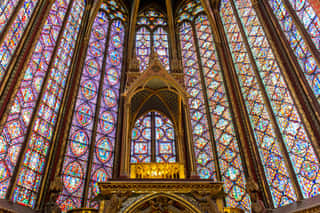
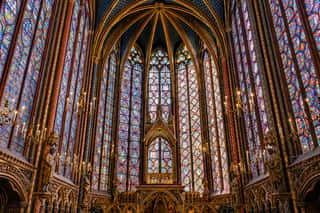
Compare colour applied to a surface with colour coming through the windows. You need not see the same exact motif on both levels. The relation between painted surrounds, architectural arcading and transmitted light is the observation, and the difference stays visible even if a particular detail is hard to identify.
Be precise about what is restored
The operator describes nineteenth-century restoration of upper painted decoration based on relatively well-preserved medieval material. That is not the same as saying all paint you see is medieval. Read the operator’s interpretation before labelling close-ups as original and keep the condition of individual medallions separate from the room’s broad effect.
A close-look method without getting in the way
Choose one motif from a fixed spot and notice where it is repeated on a nearby feature. Step aside rather than walking backwards with your head tipped up. If someone wants to look for a medallion with a named saint, use the official photographs to confirm it later rather than crowding the arcading to check a guess.
How do I remember which motif occurred where?
Record one location in plain language such as the lower vault or the side of a column before trying to name the pattern. Compare the corresponding official image later. This is particularly helpful when recounting what a castle, lily or medallion means. Avoid treating the association of one motif with royal heraldry as an explanation of every spot of colour.
Plan the rest of your trip
More handpicked experiences nearby. We source the best price.
 Top pick2 - 3 hours
Louvre Museum Tour: Mona Lisa & Iconic Masterpieces
 1.5 - 4 hours
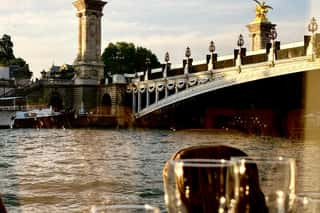
Seine River Bistronomic Dinner Cruise
 5.5 - 9.5 hours
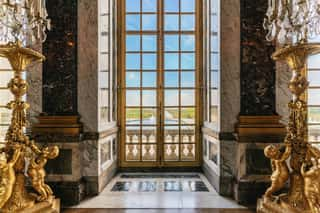
Versailles Palace Guided Tour & Gardens Access
 1 day
Louvre Guided Tour with Reserved Access & Boat Cruise
 1 hour
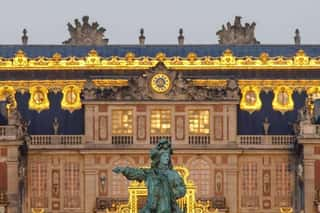
Seine River Sightseeing Evening Cruise with Champagne
 4 hours
Versailles Guided Tour by Deluxe Minibus
Keep planning
 Inside the chapelIs the Crown of Thorns still at Sainte-Chapelle?Separate what the chapel was built to house from what visitors can see today.Inside the chapelIs Sainte-Chapelle Rayonnant Gothic? What to notice from the floorLook for the relation between stone supports, window tracery and the impression of height.Inside the chapelHow much of Sainte-Chapelle is medieval? Look for the restoration layersDistinguish construction, survival and restoration through the glass, paint and sculpture.Inside the chapelPhotographing Sainte-Chapelle: get a useful view without holding up the visitPlan simple photos with a phone and verify what equipment the monument allows.
