
What to pay attention to
Ask whether an arrangement illustrates confinement, preserves a part of the building or commemorates what happened afterwards. The distinction helps you read representations of furnishings and personal objects without assuming everything belonged to the prisoner. Put this episode alongside the museum’s account of revolutionary prison life; the famous individual is one route into a much larger history.
Our handpicked tours for this trip
Independent picks, curated by us for rating, reviews and what’s included. We source the best price; free cancellation on most.
 Top pick2 hours
Sainte-Chapelle, Conciergerie, Notre Dame Guided Tour
 1 day
 2.5 hours
Notre-Dame Cathedral and Sainte-Chapelle Guided Tour
 1.5 hours
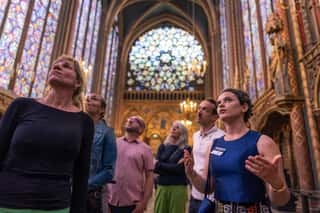
Sainte-Chapelle Small Group Guided Tour
 1 - 1.5 hours
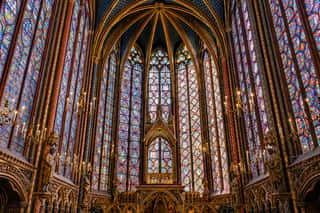
Sainte-Chapelle Guided Tour and Reserved Entry Ticket
Plan the visit with some time to read
If you are coming after Sainte-Chapelle, leave enough time to engage with this subject rather than treating it as a quick photo stop. For children, choose age-appropriate explanations and avoid making the building into a gruesome challenge. Check current access and interpretive materials on the Conciergerie site; they are more reliable than expecting every reconstruction seen in an older visitor picture to be in place.
Distinguish the site, the cell story and the display
The Conciergerie is where Marie Antoinette was held before her trial and execution in 1793. That statement does not mean everything shown in an interpreted prison space was present while she was there. Read the operator’s labels about the old cell location, later memorialisation and any displays that explain or re-create conditions.
Make one short chronology
Start with her transfer to the Conciergerie from the Temple, then note the difference between confinement, trial and execution. A single person’s chronology is enough for a short visit. Do not extend all of her prison conditions to all other prisoners or treat her fame as proof that a nearby object was hers.
Read the Conciergerie as a building and an exhibition
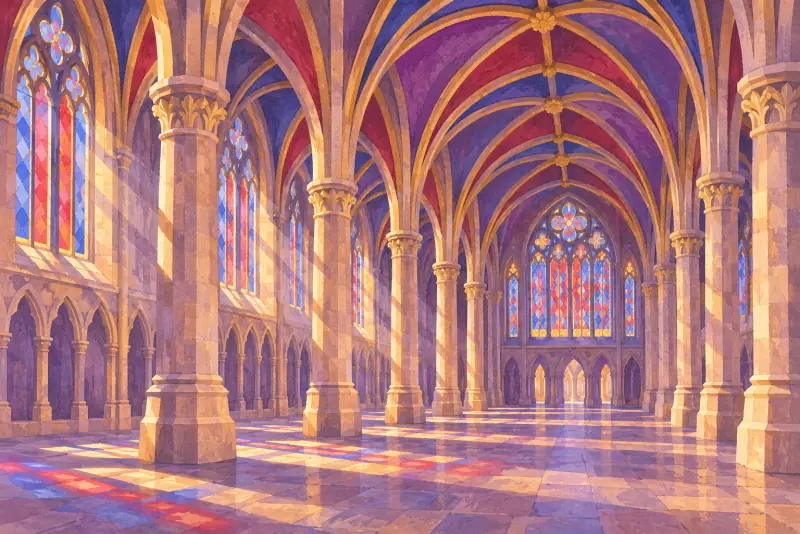
The Conciergerie is both material evidence and a place that interprets historical events. Treat the medieval volume, a modern display and an account of a prisoner as three kinds of information. The column arrangement and vault height are observable; the function of the space at a particular date may need a label; what an individual remembered or experienced needs a source. Keeping these categories apart makes a shorter self-guided visit worthwhile. It also explains why a dramatic room is not automatically the location of the event you have just read about. When you want a date, look for which part of the story it qualifies, such as the construction of a hall, a change of institution or a work of reconstruction. Then make a note of one uncertainty to look up instead of asking the architecture to settle it by appearance.
Use the chapel contrast carefully
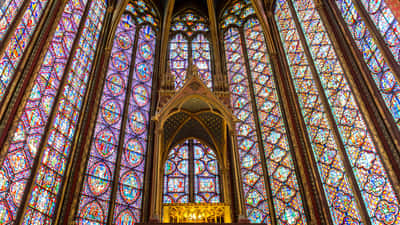
The former royal palace provides a connection to Sainte-Chapelle, but the Capetian story of Louis IX and the end of the monarchy are separated by centuries. If you visit both monuments, ask what political or religious use of a space is visible now. A quick comparison is more helpful than trying to flatten those centuries into one family story.
Use interpretation only where it adds understanding
The HistoPad is the Conciergerie's own interpretation, not the same device or service as any audio provision at Sainte-Chapelle. Check availability, language, collection and return before counting on it. A digital reconstruction can be helpful when it makes the position or historic use of a space legible, but set it down for a moment to compare what is physically present with what is explained on the screen. In a busy room, a label and a wide view can be more practical than coordinating multiple devices. Agree a pace with companions before the history section. If the viewing path is not clear, follow staff instructions rather than assuming there is a shortcut. Where the device is essential for the visit, leave enough time for its separate cutoff or choose a date that makes it easier to collect.
A better alternative to rushing to one room
If the display is busy, read the prison section first and return if the visitor route allows it. If no return is possible, use the CMN’s historical account later and focus in person on what the site actually shows. The HistoPad is optional and does not convert a re-created scene into documentary footage.
Choose the order according to the day's purpose
A combined ticket can sound like a fixed itinerary even when the two parts have different constraints. For the official combined product, the booked time concerns Sainte-Chapelle; consult the operator on how the Conciergerie fits before or after, and check the museum’s current admission guidance and any earlier cutoff for a device. If you start in the museum, set an exit trigger that leaves room to reach the chapel's marked approach without hurrying. If the chapel is first and you finish late, make a new choice about whether the museum is still worthwhile rather than assuming that getting a booking checked is the same as having a good visit. When part of the group wants historic interpretation and part wants a break, consider separate plans with a clear reunion point. Two visits only make sense when each has space to deliver what you want.
Can you see the room exactly as she left it?
Do not expect an untouched 1793 scene. The useful question is which history the visible space and labels explain and how that compares with the known captivity. Look for the site’s account of later commemoration. If you want a precise claim about the contents, location or age of one item, rely on the label for that item rather than a general portrait of Marie Antoinette.
Plan the rest of your trip
More handpicked experiences nearby. We source the best price.
 Top pick2 - 3 hours
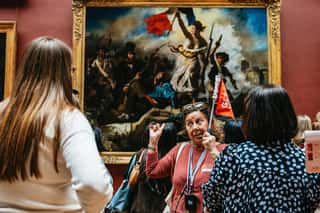
Louvre Museum Tour: Mona Lisa & Iconic Masterpieces
 1.5 - 4 hours
Seine River Bistronomic Dinner Cruise
 5.5 - 9.5 hours
Versailles Palace Guided Tour & Gardens Access
 1 day
Louvre Guided Tour with Reserved Access & Boat Cruise
 1 hour
Seine River Sightseeing Evening Cruise with Champagne
 4 hours
Versailles Guided Tour by Deluxe Minibus
Keep planning
 ConciergerieConciergerie HistoPad: what the digital reconstruction addsCompare the handheld interpretation with a shorter look at the real rooms.
 ConciergerieConciergerie’s Salle des Gens d’Armes: how to look at the medieval hallRead the hall through its span, vaults and changing use before you head to the prison rooms.
 ConciergerieThe Conciergerie as a Revolutionary prison: what to look for beyond Marie AntoinetteFollow prison conditions and judicial history without reducing the visit to one famous name.
 ConciergerieConciergerie with children: balance big rooms and difficult historyChoose a short palace-to-prison story and verify current family activities or interpretation.
