
Start with placement rather than names
Pick one figure and notice how it sits in relation to the neighbouring window and the viewing height. Then look across to a similar position and see whether the pair helps organize the space. Knowing where the sculptures stand will make it easier to connect them to an official diagram or interpretation. Avoid assigning an individual identity simply from a gesture you were able to glimpse from the floor.
Our handpicked tours for this trip
Independent picks, curated by us for rating, reviews and what’s included. We source the best price; free cancellation on most.
 Top pick2 hours
Sainte-Chapelle, Conciergerie, Notre Dame Guided Tour
 2.5 hours
Notre-Dame Cathedral and Sainte-Chapelle Guided Tour
 1.5 hours
Sainte-Chapelle Small Group Guided Tour
 1.5 hours
Sainte-Chapelle Entry with Notre Dame Outdoor Tour
 1 day
 1 - 1.5 hours
Sainte-Chapelle Guided Tour and Reserved Entry Ticket
Check what survives and what was changed
The appearance of the present chapel reflects conservation and restoration as well as medieval production. The Centre des monuments nationaux explains the sculpted decorations, including their relationship to the building's history. Use that as a starting point instead of deciding that every surface you can see belongs to the same date. If you are on a short visit, select a single sculpted detail, then compare it with the painted decoration or the glass above. This makes a better observation exercise than trying to tick off an entire list.
Notice the placement against the supports
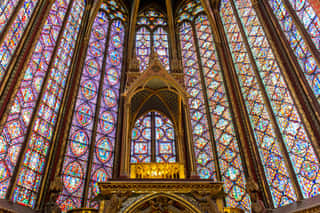
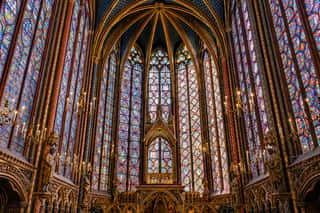
The upper chapel’s twelve apostle figures are positioned against the pillars. Use the CMN's imagery to locate one figure and notice how the repeated positions relate to the room’s vertical structure. A label such as “pillar of the Church” makes more sense once you have actually looked at how the sculptures and supports meet.
Identify only what can be distinguished
The operator describes attributes such as Peter’s key and Paul’s sword. Use an attributed figure to understand what a visual identifier looks like, then accept that not every other sculpture can be named at visitor distance. A familiar biblical name does not outweigh sculpture documentation.
Do not equate the full series with full medieval survival
The monument’s explanation distinguishes surviving originals from other figures. A view of the complete-looking series does not prove all twelve were carved at the same time or have identical restoration histories. Check the CMN’s description of the figure you want to date, and say whether you are discussing the series or a single statue.
If you have time for one comparison
Compare an apostle at a support to a small carved plant or animal motif if one is readily visible, paying attention to scale and placement. The main route matters more than the perfect angle. Use official imagery later if arrows, glare or crowds make your planned comparison impractical.
Should I try to identify all twelve in sequence?
Not unless your research needs it and you have reliable interpretation. An identifiable attribute can be a good starting point, but the skill is distinguishing what you recognise from what is uncertain. Compare placement before naming the figures; it explains why the ensemble belongs to the architecture. When writing a caption, keep the number in the series separate from the age and survival of an individual statue.
Plan the rest of your trip
More handpicked experiences nearby. We source the best price.
 Top pick2 - 3 hours
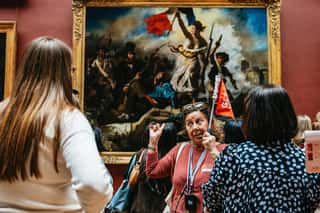
Louvre Museum Tour: Mona Lisa & Iconic Masterpieces
 1.5 - 4 hours
Seine River Bistronomic Dinner Cruise
 5.5 - 9.5 hours
Versailles Palace Guided Tour & Gardens Access
 1 day
Louvre Guided Tour with Reserved Access & Boat Cruise
 1 hour
Seine River Sightseeing Evening Cruise with Champagne
 4 hours
Versailles Guided Tour by Deluxe Minibus
Keep planning
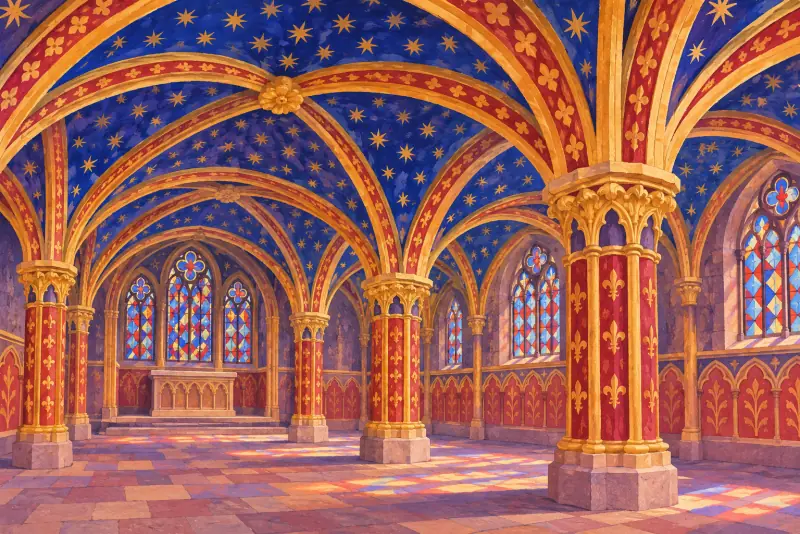 Inside the chapelIs the Crown of Thorns still at Sainte-Chapelle?Separate what the chapel was built to house from what visitors can see today.Inside the chapelIs Sainte-Chapelle Rayonnant Gothic? What to notice from the floorLook for the relation between stone supports, window tracery and the impression of height.Inside the chapelHow much of Sainte-Chapelle is medieval? Look for the restoration layersDistinguish construction, survival and restoration through the glass, paint and sculpture.Inside the chapelSainte-Chapelle’s painted ceiling: what the glass can make you missBefore looking straight up at the glass, take a minute to see where the paint sits in the architecture. The decoration fits around ribs, supports and arches.
