
An easy sequence
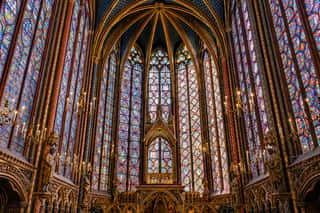
Start downstairs with the shape and colour of the ceiling. In the upper chapel, ask what changed: does the room feel wider, taller or brighter? Let children choose the window they would draw from memory. Finish by finding one painted or sculpted detail at an easy viewing height. If you want a formal children’s activity or family visit, check the monument's current programme and booking rules before promising it.
Our handpicked tours for this trip
Independent picks, curated by us for rating, reviews and what’s included. We source the best price; free cancellation on most.
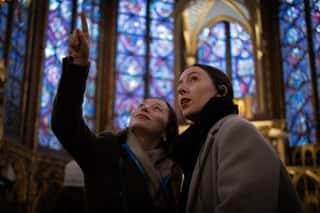 Top pick2 hours
Sainte-Chapelle, Conciergerie, Notre Dame Guided Tour
 2.5 hours
Notre-Dame Cathedral and Sainte-Chapelle Guided Tour
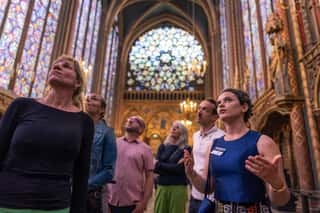 1.5 hours
Sainte-Chapelle Small Group Guided Tour
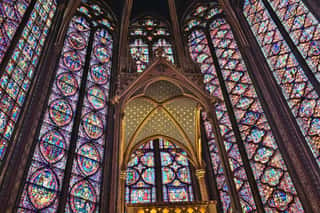 1.5 hours
Sainte-Chapelle Entry with Notre Dame Outdoor Tour
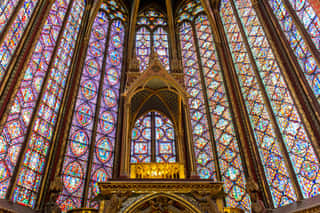 1 day
 1 - 1.5 hours
Sainte-Chapelle Guided Tour and Reserved Entry Ticket
Make the logistics invisible to the children
Prepare the tickets and check security and pushchair rules yourself. Agree on a meeting point if adults need to separate temporarily. Avoid a second indoor visit just to complete an itinerary after a tired family has seen the glass. A square or a look at the river can be a better next activity. If you finish earlier than expected, ask each child which detail they would show a friend; that is a useful measure of what they actually saw.
Give children one observation they can share
Before going upstairs, play a pattern game in the lower chapel: choose a repeated shape, then find another example without touching it. Upstairs choose a colour group or shape of window and let the children say what changed between the two spaces. A game about seeing can work without identifying every biblical character.
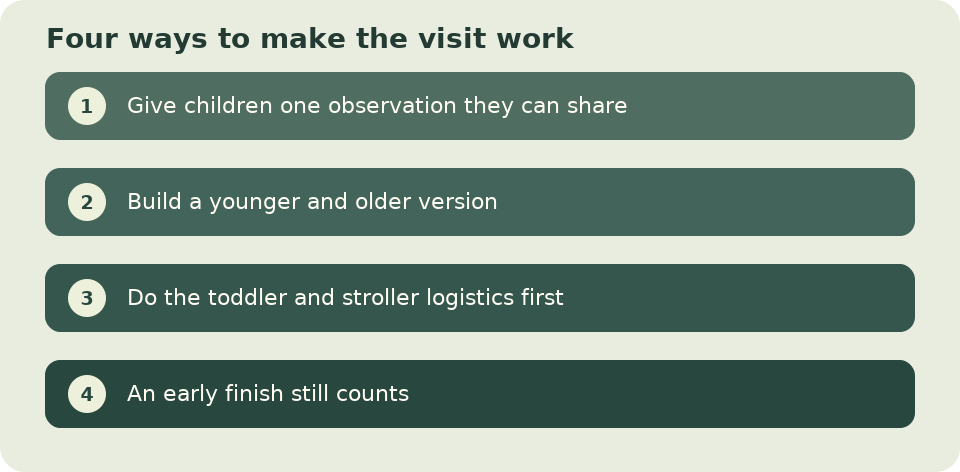
Build a younger and older version
An early reader can point to one animal, shape or colour and describe where it repeats. An older visitor can draw two tiny sketches to compare the round rose and one tall bay, or ask why details high up are hard to read. Use these as invitations, not as a test the child must get right.
Build in a change of pace without announcing a failure
Decide together how to indicate that a break or early exit would be useful, and agree what the next comfortable place will be. Choose a street-level option if it meets the needs of the group; do not assume a shaded, quiet or seated space is accessible without checking. Having a simple break in mind can make it easier to enter with confidence. It also means a companion can finish one observation while someone else disengages, if staff and circulation allow and everyone is comfortable with that. Agree where to meet again, not simply which room you are leaving. On a challenging day, protect a single meaningful observation and leave a second timed activity out of the plan rather than carrying pressure from one site to the next.
Do the toddler and stroller logistics first
Check CMN admission requirements for each child. The published guidance says pushchairs must fit security screening when folded and do not go upstairs; ask for the practical procedure if carrying a child is not feasible. Have another adult hold the ticket confirmations so the person managing a child has fewer things to do.
An early finish still counts
End after one shared observation if energy drops. Do not stretch the visit by steering a tired child into a second historic interior on the assumption that a combined ticket requires it. Tell children where they can ask questions in a quieter voice and where the family can sit outside later.
What can we do if the kids cannot read details high up?
Switch from naming people to describing the shape of the window, where the colour repeats or how looking from several steps away changes the impression. Each child can choose their own detail, then explain it outside. Differences in what they notice are useful. Do not make them wait while adults settle questions better answered from an illustration at home.
Make the team plan legible before leaving
Use ordinary language and avoid passing multiple links to everyone without saying which action each person needs to take. Name who carries the tickets, who will discuss arrangements with staff if asked, and how the group will keep in touch if separated. Help requested by a companion and help imposed without asking are not the same thing; confirm what the visitor prefers. If someone depends on an accessible route or specific resource, confirm it with the source and avoid substituting an assumption from a different Paris venue. Keep a backup that still respects the purpose of the day. If the full experience needs to be moved, that is more useful than announcing that all levels or resources will be available without evidence.
Plan the rest of your trip
More handpicked experiences nearby. We source the best price.
 Top pick2 - 3 hours
Louvre Museum Tour: Mona Lisa & Iconic Masterpieces
 1.5 - 4 hours
Seine River Bistronomic Dinner Cruise
 5.5 - 9.5 hours
Versailles Palace Guided Tour & Gardens Access
 1 day
Louvre Guided Tour with Reserved Access & Boat Cruise
 1 hour
Seine River Sightseeing Evening Cruise with Champagne
 4 hours
Versailles Guided Tour by Deluxe Minibus
Keep planning
 Access & situationsVisiting Sainte-Chapelle with low vision: plan a visit beyond the windowsCheck adapted resources and choose an experience that does not depend on reading small coloured panels.
 Access & situationsA quieter, simpler plan for a cognitively accessible Sainte-Chapelle visitUse adapted visitor information and agree on a short, predictable sequence.
 Access & situationsVisiting Sainte-Chapelle in a heatwave: keep the timed stop manageableCheck the heat notice, plan the exposed wait, and leave an easy option after the chapel.
 Access & situationsSainte-Chapelle with a suitcase: arrange luggage storage firstDo not turn up at Sainte-Chapelle with a large suitcase expecting the chapel to take it.
