
Use three distances
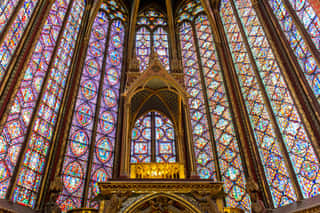
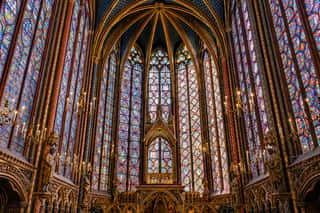
First take in the wall as an enclosure. Notice how the long window fields repeat and where the circular rose breaks that pattern. Next, isolate one bay rather than shifting your attention continuously. Then find a single scene or repeated colour motif you can recognise without craning your neck. Look back at the wider structure once you have seen it. The individual picture is easier to remember when it has a place in the whole room.
Our handpicked tours for this trip
Independent picks, curated by us for rating, reviews and what’s included. We source the best price; free cancellation on most.
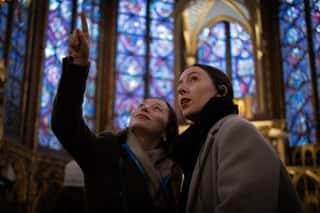 Top pick2 hours
Sainte-Chapelle, Conciergerie, Notre Dame Guided Tour
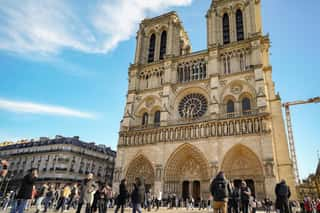 2.5 hours
Notre-Dame Cathedral and Sainte-Chapelle Guided Tour
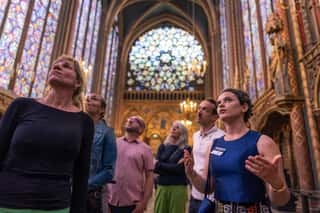 1.5 hours
Sainte-Chapelle Small Group Guided Tour
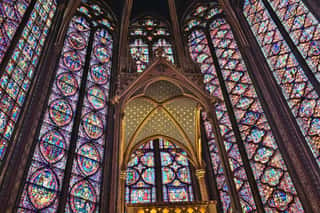 1.5 hours
Sainte-Chapelle Entry with Notre Dame Outdoor Tour
 1 day
 1 - 1.5 hours
Sainte-Chapelle Guided Tour and Reserved Entry Ticket
Choose a theme to follow
Try a narrative theme, the movement of a character across scenes, or the relationship between texts and royal imagery. The relics bay gives a different question from the rose: why is this subject shown in this particular building? Visit conditions, light, and conservation work affect what is visible. Move aside if the best viewing spot happens to be in the main path, and use the published descriptions for details too high to resolve in person.
Give the whole window a place in the room
From a spot that leaves the main route clear, choose one tall bay and see where it sits relative to the supports and the end of the chapel. Move from that silhouette to a group of scenes, then pick one detail you can recognise. A high scene does not become legible just because a guidebook lists all its figures.
Pick a question rather than a complete story
Choose where the colour changes, how a figure reappears or why the relics window matters in a royal chapel. Compare the published interpretation after you look so you can distinguish observation from explanation. If a particular detail is uncertain, note it as a question instead of trying to identify it by colour alone.
Contrast the tall bays with the west rose
Instead of reading the circular rose as if it had the same arrangement as an upright bay, look for its different framework and then check the CMN’s interpretation of the Apocalypse. A quick sketch of the two outlines may be enough to make the distinction stick.
A workable visit on a crowded or cloudy day
Do the broad view first and use one easily seen detail for your close look; postpone scene identification until you can consult official illustrations. Don’t linger on a stair or in the central circulation path. On a return visit you can switch to another theme instead of repeating the same itinerary.
Should I copy the direction in which another visitor is looking?
You can make a stronger observation by deciding what works from your own position. Begin at one place in the room, compare one neighbouring field and choose one detail you can actually see. Check a published diagram before asserting sequence. A visitor scanning left to right is not evidence that all the glass was meant to be read in that way.
Plan the rest of your trip
More handpicked experiences nearby. We source the best price.
 Top pick2 - 3 hours
Louvre Museum Tour: Mona Lisa & Iconic Masterpieces
 1.5 - 4 hours
Seine River Bistronomic Dinner Cruise
 5.5 - 9.5 hours
Versailles Palace Guided Tour & Gardens Access
 1 day
Louvre Guided Tour with Reserved Access & Boat Cruise
 1 hour
Seine River Sightseeing Evening Cruise with Champagne
 4 hours
Versailles Guided Tour by Deluxe Minibus
Keep planning
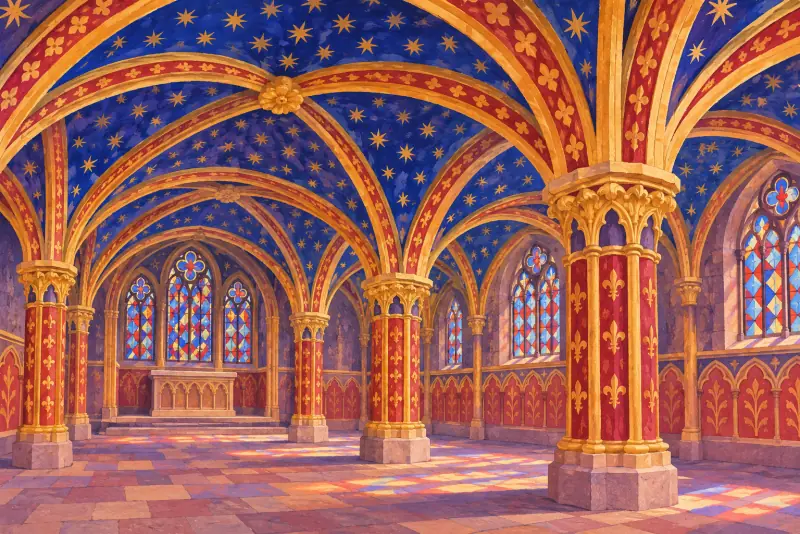 Inside the chapelIs the Crown of Thorns still at Sainte-Chapelle?Separate what the chapel was built to house from what visitors can see today.Inside the chapelIs Sainte-Chapelle Rayonnant Gothic? What to notice from the floorLook for the relation between stone supports, window tracery and the impression of height.Inside the chapelHow much of Sainte-Chapelle is medieval? Look for the restoration layersDistinguish construction, survival and restoration through the glass, paint and sculpture.Inside the chapelSainte-Chapelle’s painted ceiling: what the glass can make you missBefore looking straight up at the glass, take a minute to see where the paint sits in the architecture. The decoration fits around ribs, supports and arches.
